
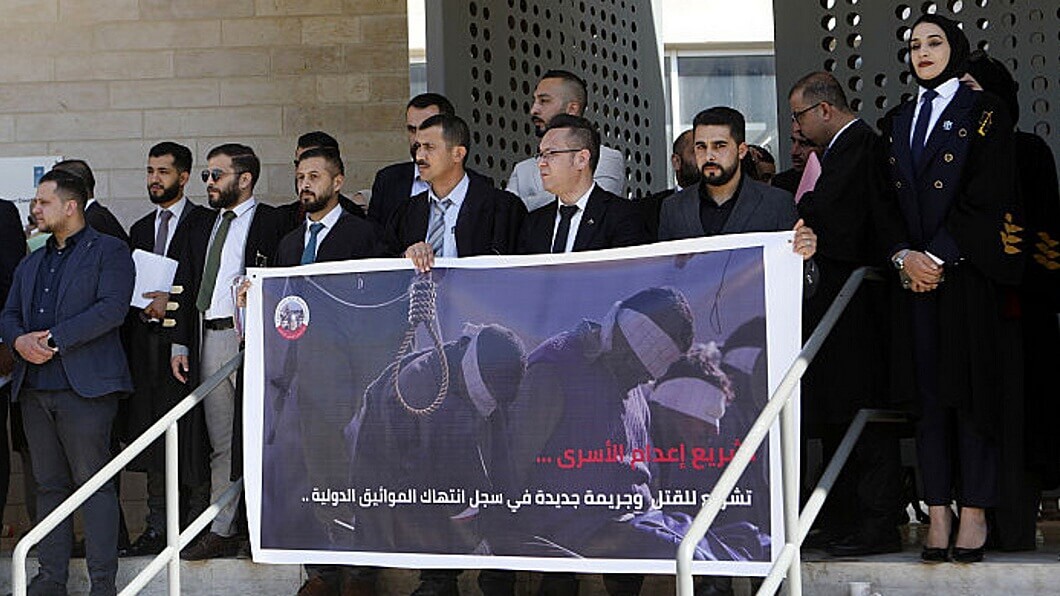
Rogue states and dictatorships do not want to have anything to do with politics. For that reason, their opponents are “terrorists.” A trick that Israel has no choice but to use feverishly.
| This post is part of a reading series on Zionism vs. Democracy, by Philippe Roussel. To quickly access all chapters, open the book title tab on the Authors & Books page. |
Israeli citizens are in an uncomfortable position regarding the universality of moral principles. Assuming that a Jewish state is what is morally and historically right, Zionism logically concludes that Palestinians are an issue and that they must give way. Since there cannot be two people in the same place, either Israelis enjoy peace, security, and freedom, or Palestinians do. In the Zionist logic of a Jewish state, it can only be one or the other.1
To any sane mind, a political state is built on the principle of equality among all citizens, regardless of their religion or ethnicity. Zionism postulates the exact opposite: religion makes citizenship. Whether or not you believe in God, your Jewish ancestry attests that you are a natural-born citizen of Israel. Unsurprisingly, Palestinians tend to resist their domination and ethnic cleansing by Israel. David Ben-Gurion (1886–1973), the primary national founder and first prime minister of the State of Israel, unambiguously stated in this regard, “If I were an Arab leader I would never make terms with Israel. That is natural: we have taken their country.”2 If Ben Gurion had the intellectual honesty to acknowledge Palestinians’ historic reality and legitimate resistance to the Zionist project, this doesn’t mean that he was entirely cynical or doubting the validity of Zionism. It is simply that, convinced that Jews would be safe once and for all if they had a country of their own, he understood that this meant imposing its reality among other nations. Palestinians, for their part, would have to make do with it.
Though coming from a skilled strategist, this was nevertheless a dream. Palestinians would not fade away. Most importantly, their right to the land and to political self-determination was morally and legally undeniable. By denying it, Ben-Gurion was telling the world that Israel was above the universality and unconditionality of human rights, and that the latter had to cede against ethnic purity. That absurd exception to the universality of principles found powerful allies in the British Mandate in Palestine (1922–1948)—calculated to enforce Zionist presence on the land as a bridgehead for the influence of the British Empire in the Levant—, and in the shock caused by the horror of the Shoah. Predictably, the next step was for Ben Gurion to go all in on chasing Palestinians from their ancestral land.
- About the Author
- Latest Posts

Philippe Roussel has long been interested in studying the power structures defining our increasingly unsustainable and undemocratic world. This website serves as the primary platform where he presents his ideas and findings to an international audience.