
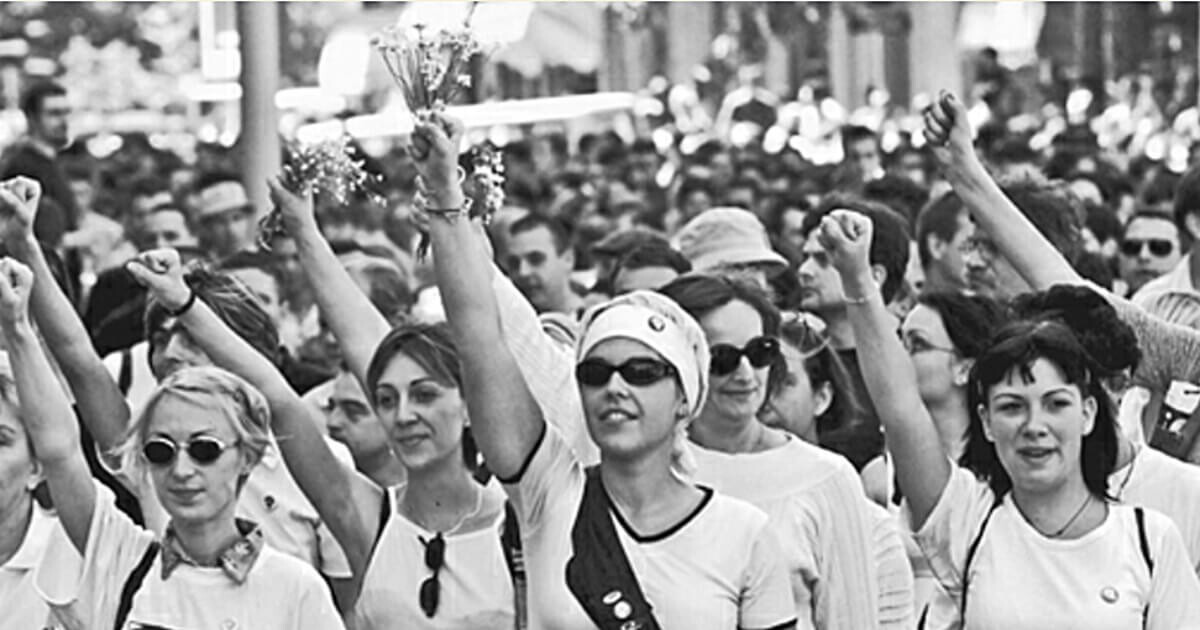
“. . . creating a sense of community, building the elements of a group identity, having a cohesive organization, leaving none of your men or women behind, and sticking to your values.” (Srdja Popovic)
| This post is part of a reading series on Blueprint for Revolution, by Srdja Popovic. To access all chapters quickly, open this book’s page. Disclaimer: This chapter summary is personal work and an invitation to read the book itself for a detailed view of all the authors’ ideas. |
Srdja Popovic ends the previous chapter by saying, “Believing that change can happen to you, dreaming big and starting small, having a vision of tomorrow, practicing laughtivism, and making oppression backfire: these are the foundations of every successful nonviolent movement. But like every building, the foundations aren’t enough. Unless a solid structure is erected slowly and deliberately, the whole thing is likely to collapse. And the first thing you need for a house to stand united is for everyone to work in unity.”
Unity is hard to achieve. The first reason concerns the nature of oppressive regimes. Atomizing society into tiny fragments, notably by making gatherings of more than 5 or 6 persons illegal, prevents people from sharing their views, resolving their differences, and building coalitions. An organized and well-oiled opposition is virtually impossible.
A more fundamental reason is the innate tendency we all share, to some degree, to believe that we know better than anyone else. “Even today, my friends from Otpor! still like to rib each other about things they said more than a decade ago in moments of anger, and many of those quarrels—which now look so silly and negligible to us—easily could have ended in some of us quitting the group and vowing to start a ‘more pure’ competing movement.”
“But there’s more. The problem of unity is made even thornier because there are so many different types of unity out there.” Unity during black and whites during the Civil Rights movement in the United States, unity between straight and gays for the latter’s rights, unity between religious faiths to fight sectarianism and bigotry, etc. “But there’s no reason to get depressed, because bringing together even the most disparate groups is possible if you approach the problem correctly. And that involves realizing that within these big strategic unities are smaller tactical unities, which is where we begin.”