
Note: To know how the book club can strengthen your networking efforts, please read the About page.
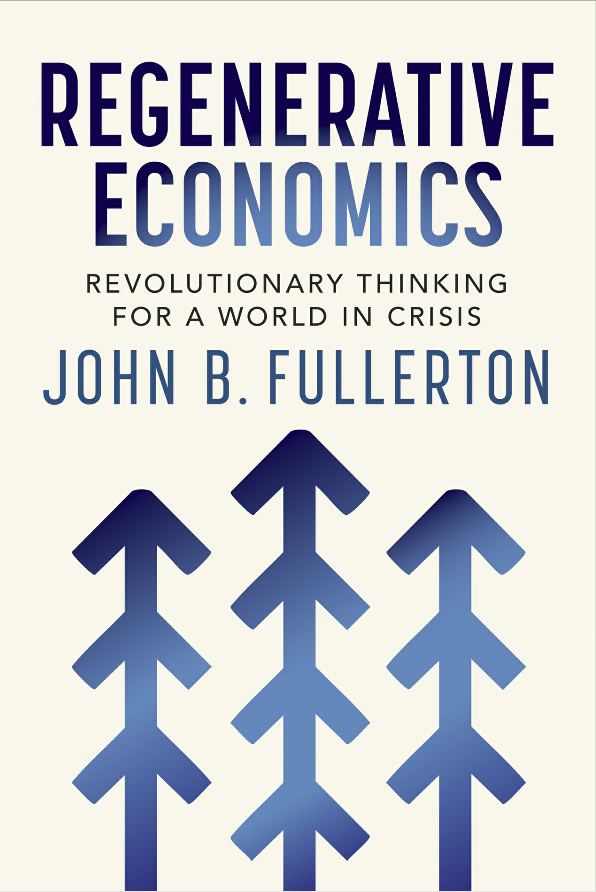
“Regenerative Economics is based on the deceptively simple idea that an economic system should emulate the process and patterns that define all life, enabling it to adapt and evolve to higher levels of complexity. This science-based next evolution of economics explains the root cause of the polycrisis–the compounding impacts of climate change, ecosystem and biodiversity loss, planetary systems breakdown, and increasing social and economic inequity—and promises a hopeful pathway forward at this pivotal moment.
“Rather than reacting to crisis after crisis, the purpose of a regenerative economy is to create the conditions that nurture and sustain health and all life.
“This hard-hitting and scientifically rigorous yet ultimately hopeful book:
- Identifies the unseen fatal error of our current economic model
- Outlines a set of key regenerative design principles to navigate the polycrisis
- Prescribes transformative individual actions and policies that both embrace and move beyond current materialist ideas of sustainability, circularity, and degrowth, to redefine systemic health and true value within the context of a whole-living-systems approach
- Offers a fresh pathway through the polycrisis and toward a new economy—one that prioritizes human and planetary well-being, operates within ecological limits, and promotes a more just and sustainable future.
“This seminal work is required reading for business, government, and community leaders; economic thinkers; academics; and anyone who questions the future of capitalism in light of finite planetary boundaries and growing social injustice.” (Source: New Society Publishers)
Learn about the study program or join a group.
Chapters
PART 1
Chapter Two: From a Mechanistic to a Holistic Worldview
Chapter Three: Eight Principles of Regenerative Vitality
Chapter Four: Regenerative Economies Emerging in the Real World
Chapter Five: Creating a Regenerative Civilization
PART 2
Chapter Six: Introduction—A Decade of Learning and a Theory of Change
Chapter Seven: Misunderstandings About Regeneration
Chapter Eight: The Regenerative Paradigm
Chapter Nine: Epiphany—The Missing Institution of the Commons
Chapter Ten: Regenerative Technology—An Oxymoron?
Chapter Eleven: The Finance Algorithm
Chapter Twelve: Reimagining Public Policy
Epilogue & A Call to Action