
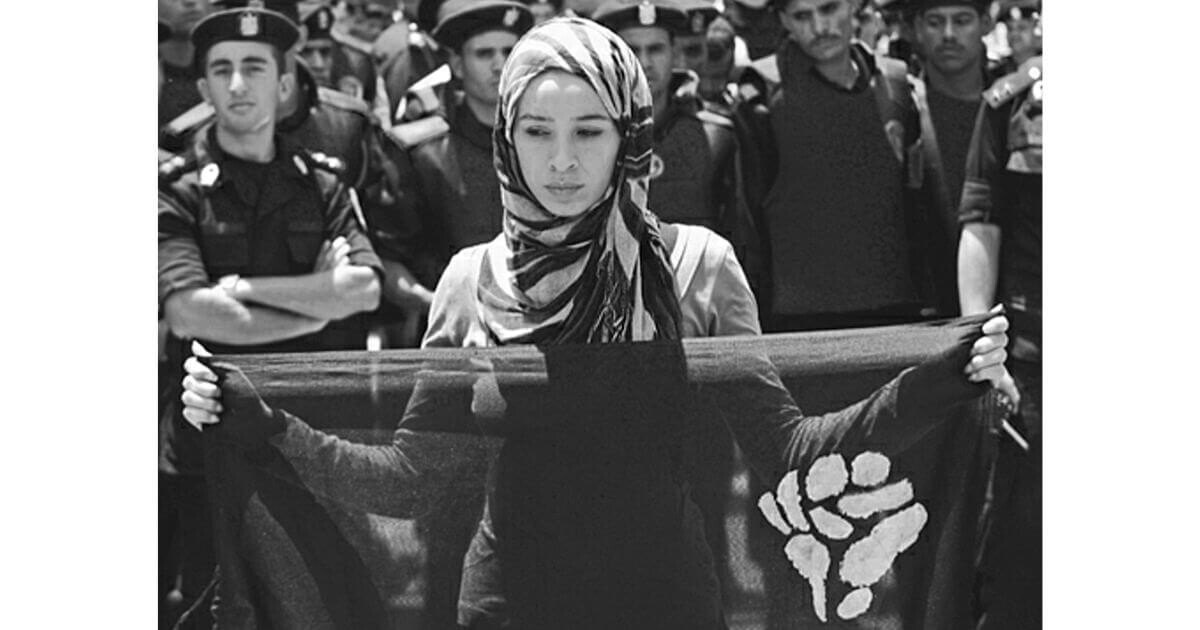
Achieving a revolution often seems hopeless for people living under oppressive regimes. Drawing key lessons from his own experience, Srdja Popovic shows that this can be done by everyone, everywhere.
| This post is part of a reading series on Blueprint for Revolution, by Srdja Popovic. To quickly access all chapters, open the book title tab on the Authors & Books page. Disclaimer: This chapter summary is personal work and an invitation to read the book itself for a detailed view of all the authors’ ideas. |
Sometime in 1992, the author, a freshman biology student, heard that his favorite rock band was going to give a free concert in Belgrade. That was under Milošević. A brutal dictator with paranoid tendencies who had brought Serbia’s economy to the ground with various wars and was pursuing an ethnic cleansing policy against anything Muslim in Bosnia. Not a fun guy to be around. The night of the concert, the band showed up in a flatbed truck circling around the square, yelling pacifist lyrics at the intent of their commander in chief and everybody else in the assembled crowd. A bold act of defiance that could bring them to jail, or worse. Hence, the moving truck.
To the author, that was an epiphany. “I understood that activism didn’t have to be boring; in fact, it was probably more effective in the form of a cool punk show than as a stodgy demonstration. I understood that it was possible, even under the most seemingly dire conditions, to get people to care. And I understood that when enough people cared, and enough of them got together to do something about it, change was imminent.” As Milošević’s dictatorship steadily went from bad to worse, Srdja Popovic and a few of his friends decided in 1998 to start a movement.
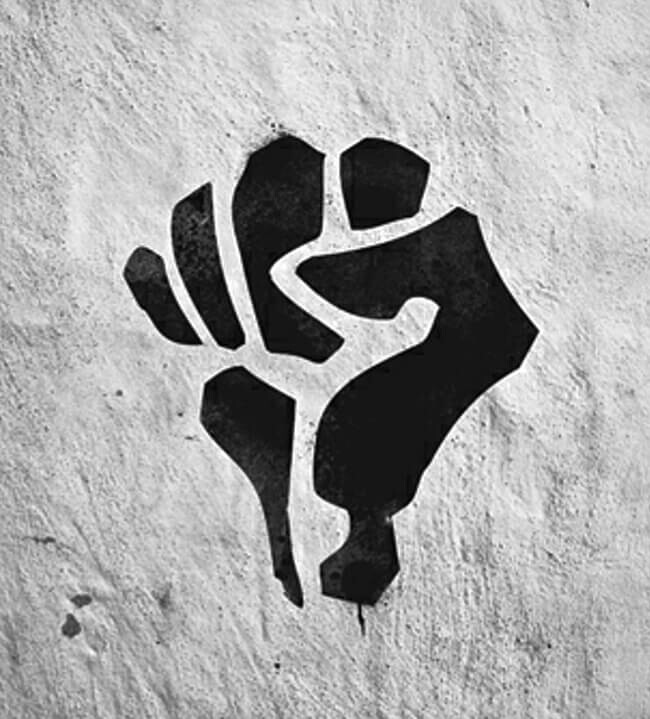
Their first step was to craft the logo of “a cool-looking black fist that was a riff on a potent symbol of social change that has served everyone from the partisans who fought against the Nazis in occupied Yugoslavia during World War II to the Black Panthers in the 1960s.” What could have seemed quite superficial was, in fact, tactically sound. Very few people would have dared to go marching against the power in place at the time. “We could, however, spray-paint three hundred clenched fists in one evening, and one morning early in November the citizens of Belgrade woke up to discover that Republic Square had been covered by graffiti fists. . . . this gave people the sense that something large and well-organized was lurking just beneath the surface.” Young people joined in droves and followed a selection process consisting of spray-painting the fist in selected locations to prove that they were serious (and not police informants). Before long, all of Belgrade knew the fist.